
Digital Menu vs Paper Menu: What's Right for Your Restaurant in Lebanon?
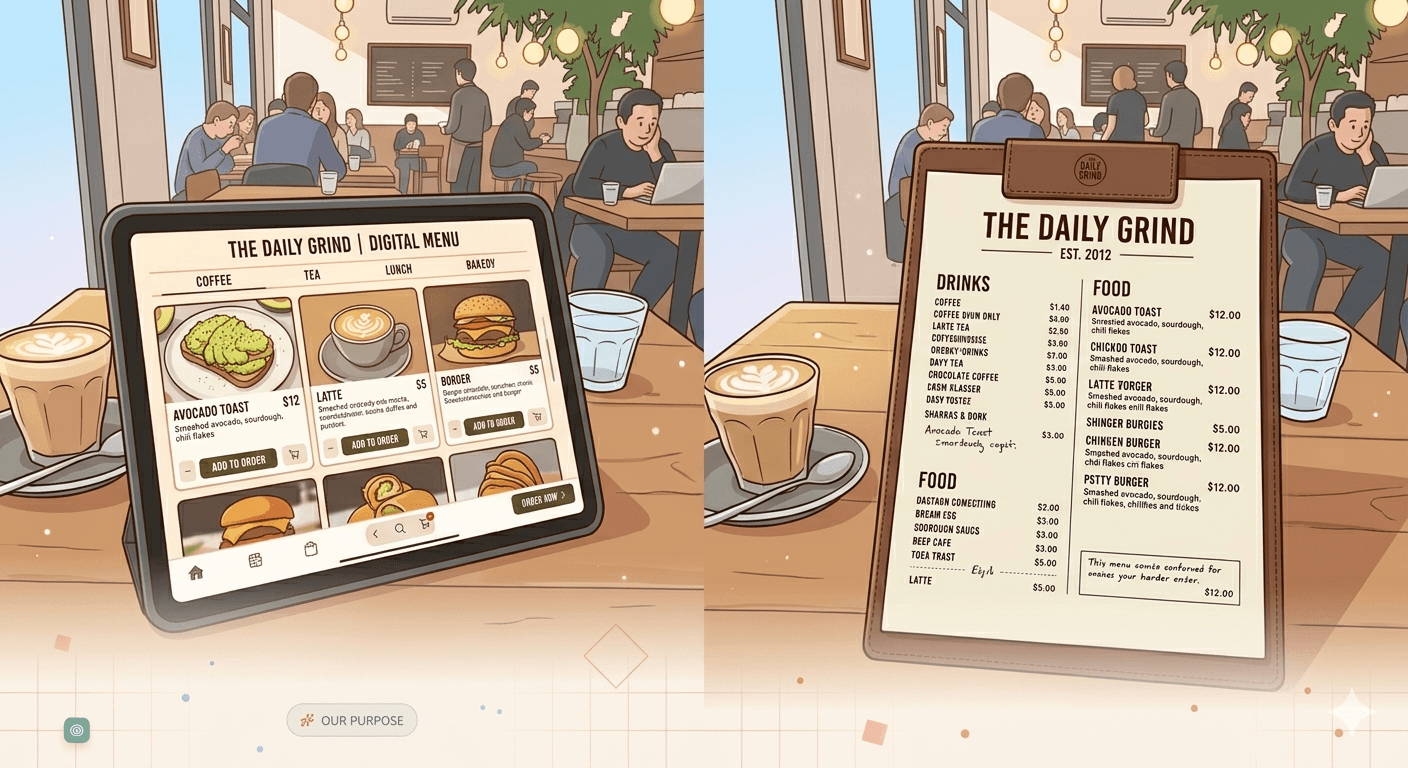
The Menu Decision Every Lebanese Restaurant Faces
You're running a restaurant in Lebanon. You have enough to manage — staff, suppliers, power cuts, and keeping customers happy. The last thing you want is to overthink your menu format.
But the menu is one of the first things a customer interacts with. It shapes their perception of your restaurant before they taste a single dish. So the choice between paper and digital actually matters more than most owners realise.
Here is an honest comparison of both options for Lebanese restaurants in 2026.
The Real Cost of Paper Menus
Paper menus feel free because the cost is spread out and easy to ignore. But add it up:
- Design fees — every time you update, you pay a designer again.
- Printing costs — a decent laminated menu costs $3–8 per copy. For a 20-table restaurant with 2 menus per table, that's 40+ copies every reprint.
- Reprinting frequency — prices change, dishes change, seasons change. Most Lebanese restaurants reprint 2–4 times per year minimum.
- Replacement costs — menus get damaged, stained, and lost. Budget for ongoing replacements.
A conservative estimate for a mid-sized Lebanese restaurant: $400–800 per year just in menu printing. That's before accounting for the time spent coordinating with designers and print shops.
The Real Cost of a Digital Menu
A digital menu on a platform like Tap 2 Eat costs a flat monthly fee — typically far less than what you spend on a single paper menu reprint. You update it yourself, instantly, from your phone. No designer, no printer, no waiting.
The one-time cost is printing a few QR code table cards or stickers — which you only ever need to print once, even if your entire menu changes.
Side-by-Side Comparison
| Factor | Paper Menu | Digital Menu |
|---|---|---|
| Update speed | Days to weeks | Instant |
| Ongoing cost | High (reprinting) | Low (monthly fee) |
| Food photos | Expensive to include | Free, unlimited |
| Works without electricity | Yes | Yes (loads on phone) |
| Customer hygiene | Shared between tables | Personal device only |
| New customer discovery | No | Yes (via Tap 2 Eat) |
| Menu analytics | None | See what customers view |
| Language switching | Requires separate print | Instant toggle |
When Paper Menus Still Make Sense
Paper menus are not dead. There are situations where they work better:
- High-end fine dining where the physical menu is part of the brand experience and is rarely updated.
- Older clientele who are less comfortable with smartphones — though this is less common in Lebanon than most owners assume.
- Backup option — even restaurants with digital menus keep a few printed copies for guests who prefer them.
The Real Advantage of Digital That Most Owners Miss
The biggest advantage of a digital menu on Tap 2 Eat is not the cost saving — it's the discovery.
When your menu is on Tap 2 Eat, diners who have never heard of your restaurant can find you while browsing. Someone in Achrafieh looking for "Japanese restaurants near me" might discover your sushi menu and visit for the first time. That never happens with a paper menu.
Digital menus that live on a discovery platform turn your menu into a marketing tool. Paper menus are only seen by people already sitting at your tables.
Our Recommendation for Lebanese Restaurants
Use a digital menu as your primary format, and keep 2–3 printed copies as a backup. This gives you the cost savings, instant updates, and new customer discovery of digital — without leaving any guest without an option.
The transition is easier than you think. Most restaurants on Tap 2 Eat were fully set up within a day.
Ready to see what it looks like for your restaurant? Contact us on WhatsApp or visit our pricing page to get started.